


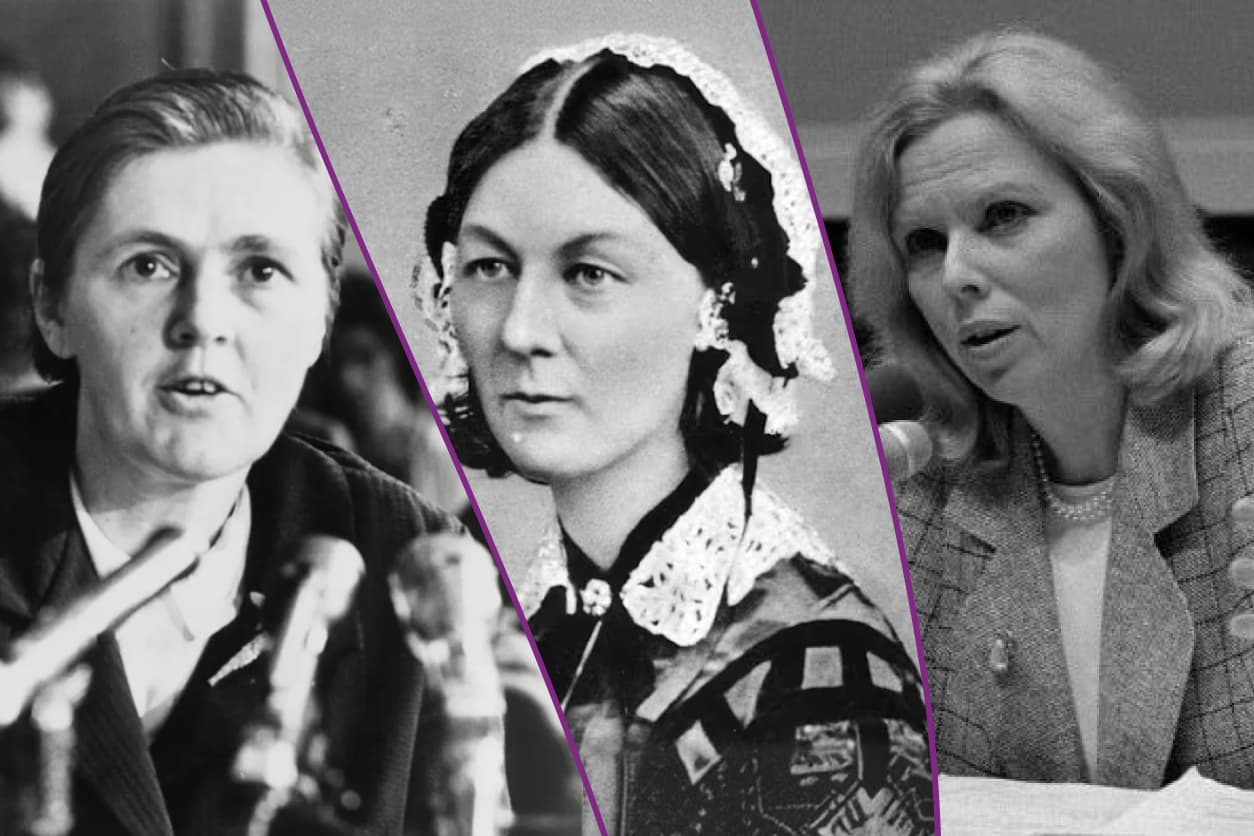
March is Women’s History Month, a time to recognize the contributions, achievements, and influence of women throughout history. In that spirit, we’re honoring three women whose work permanently shaped the field of clinical research, and whose lessons remain as relevant as ever.
Many of the principles that guide modern clinical trials—from safety standards to patient inclusion—were influenced by women who challenged the status quo and reshaped how research is conducted.
Their legacies also offer important lessons for one of today’s biggest challenges: patient recruitment and retention.

Frances Kelsey: Safety comes first
In the early 1960s, FDA scientist Dr. Frances Kelsey stood firm against intense pressure from a pharmaceutical manufacturer and refused to approve thalidomide for the U.S. market. The evidence wasn’t there—and she wouldn’t be moved. Her resolve kept the drug off American shelves while it caused devastating birth defects in other countries.
Lesson for today:
Trust is the foundation of clinical trials. Every recruitment touchpoint—from informed consent to site communication—is an opportunity to demonstrate that patients’ safety comes before everything else. When people feel protected, they participate.
Florence Nightingale: Data should drive decisions
Florence Nightingale was more than a pioneering nurse—she was a data scientist before the term existed. During the Crimean War, she gathered and visualized mortality data to prove an uncomfortable truth: most soldiers weren’t dying from battle wounds. They were dying from preventable infections caused by poor sanitation.
Lesson for today:
Data-driven insights should guide recruitment strategies. The more sponsors understand about patient populations, disease burden, and real-world barriers to participation, the more precisely—and compassionately—they can reach the people who need them most.
Bernadine Healy: Representation matters
As the first female director of the NIH, Dr. Bernadine Healy exposed an uncomfortable truth that the research establishment had long ignored: women were being routinely excluded from clinical trials. The result was treatments developed, tested, and dosed based almost entirely on male biology. Her advocacy directly led to federal policies mandating the inclusion of women in NIH-funded research.
Lesson for today:
Diversity in clinical trials isn’t optional—it’s essential.
If the people enrolling in trials don’t reflect the people who will ultimately use the treatment, the science is incomplete. Building equity into recruitment isn’t just the right thing to do—it’s the only way to generate evidence that actually works for everyone.
The takeaway
The women who shaped clinical research didn’t just advance science—they changed what it means to do science responsibly. They asked harder questions, held the line on standards, and refused to accept a research model that left people out.
Today’s recruitment challenges echo the lessons they taught us:
- Build trust with patients
- Use data to guide strategy
- Prioritize inclusion and representation
As we celebrate Women’s History Month, it’s worth remembering that progress in this field has never come from comfort. It has come from people—often women—who were willing to challenge what was accepted and fight for what was right. That work continues today, in every enrollment conversation, every protocol decision, and every effort to make clinical research more equitable and more human.